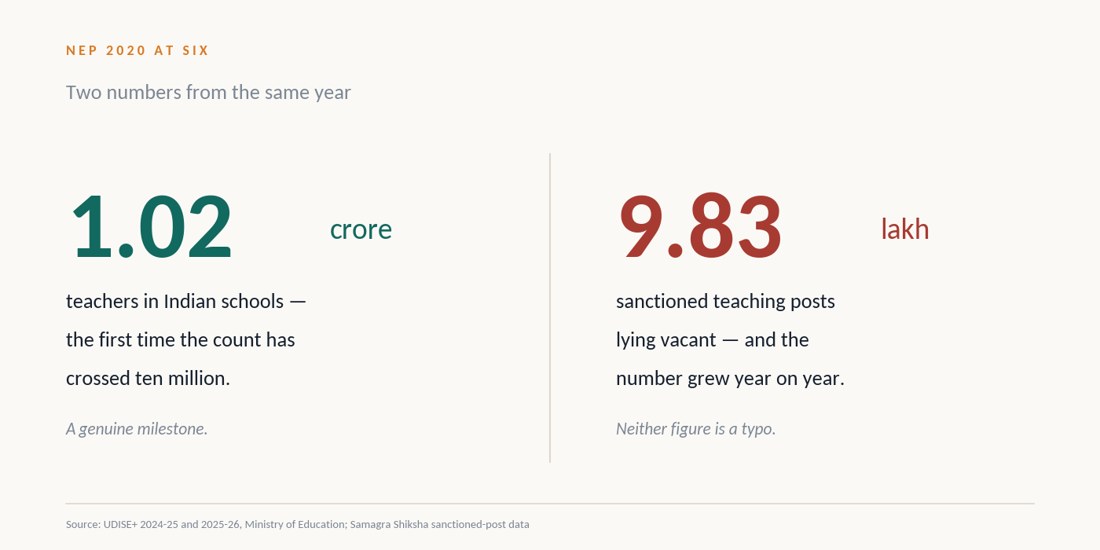
India crossed 1 crore teachers for the first time in its history. It also has 9.83 lakh vacant teaching posts. Both numbers are from the same year. Neither is a typo.
Six years into NEP 2020, here is what the data actually says — the good and the uncomfortable, on the same page.
What has genuinely moved
- GER crossed 30 for the first time (from 23.7 in 2014–15)
- Higher education enrolment at 4.50 crore
- Female GER at 31.2 — above the national average
- Women now 44% of STEM enrolment
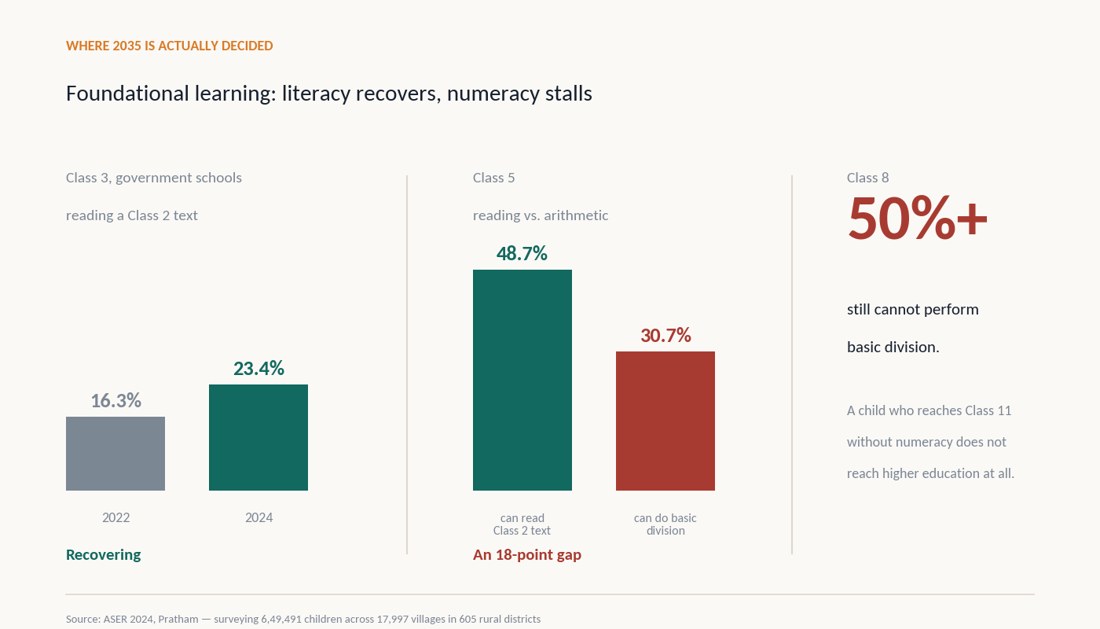
- Class 3 reading in government schools up from 16.3% to 23.4% in two years
- 54 Indian institutions in QS World Rankings 2026, up from 28 in 2021
That is real progress. Anyone dismissing NEP as cosmetic is not reading the numbers.
What has not
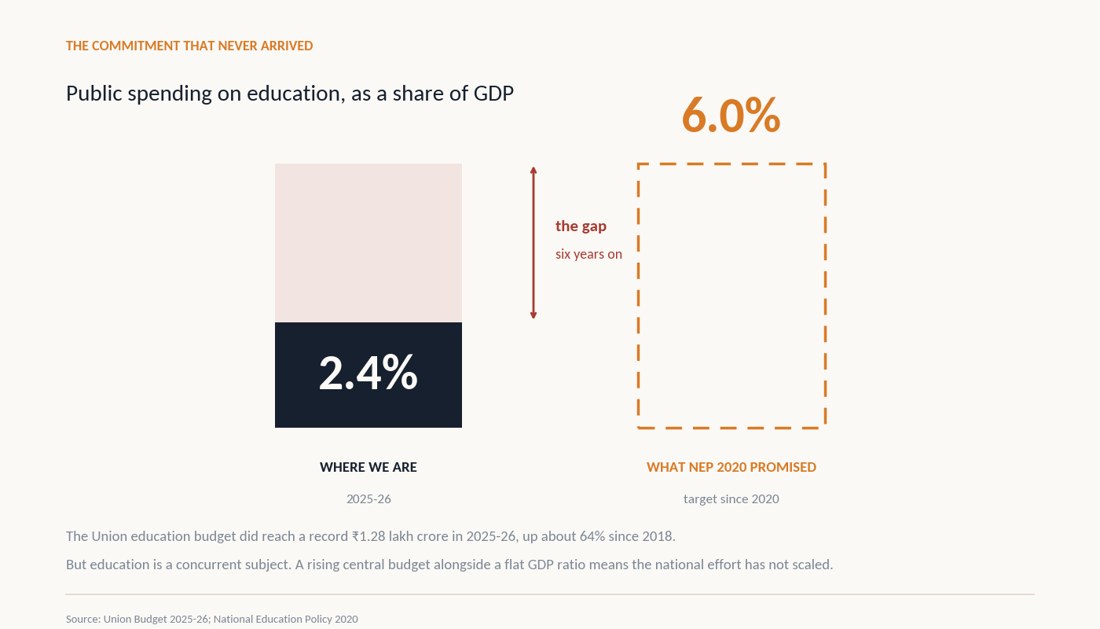
- Education spending: 2.4% of GDP. The NEP commitment was 6%.
- 9.83 lakh vacant sanctioned teaching posts — and vacancies grew year on year
- 10–12 lakh teachers teaching at levels they are not qualified for
- Over 1 lakh schools still running on a single teacher
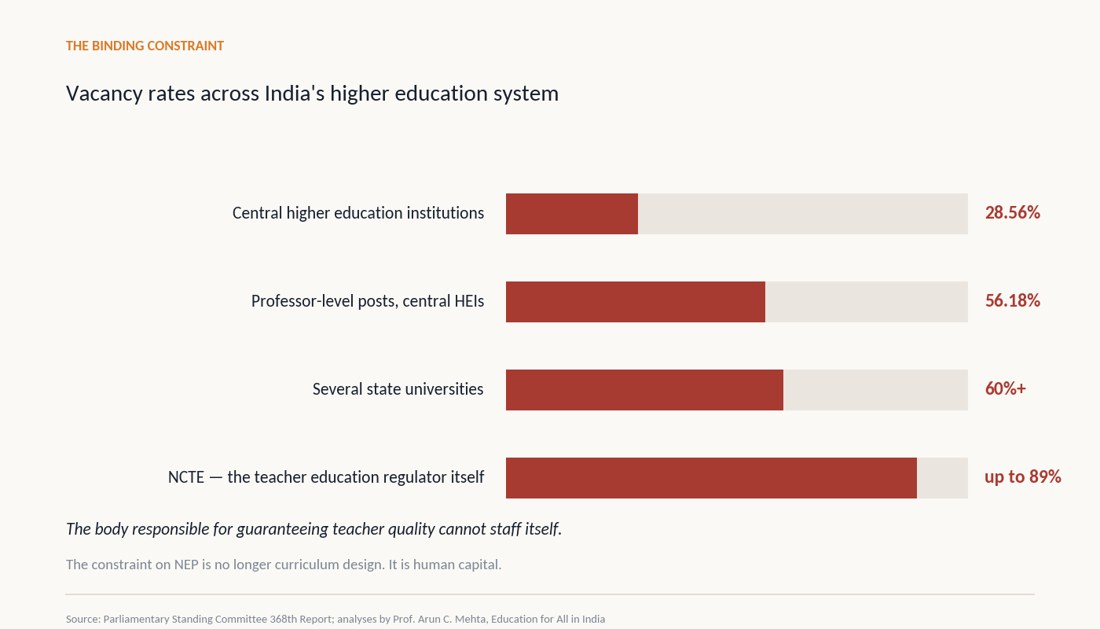
- Faculty vacancies at 28.56% in central HEIs, 56.18% at professor level, 60%+ in some state universities
- NCTE — our teacher education regulator — operating with 54–89% of its own posts unfilled
And the one that quietly undermines everything else:
NEP mandates annual GER monitoring. You cannot monitor annually on a four-year lag.
The point I keep coming back to
NEP 2020 has succeeded at architecture and struggled at plumbing.
The constraint is no longer curriculum design. It is teacher supply and distribution. A well-designed four-year degree delivered by a department at half strength is not reform — it is the old system in new documentation.
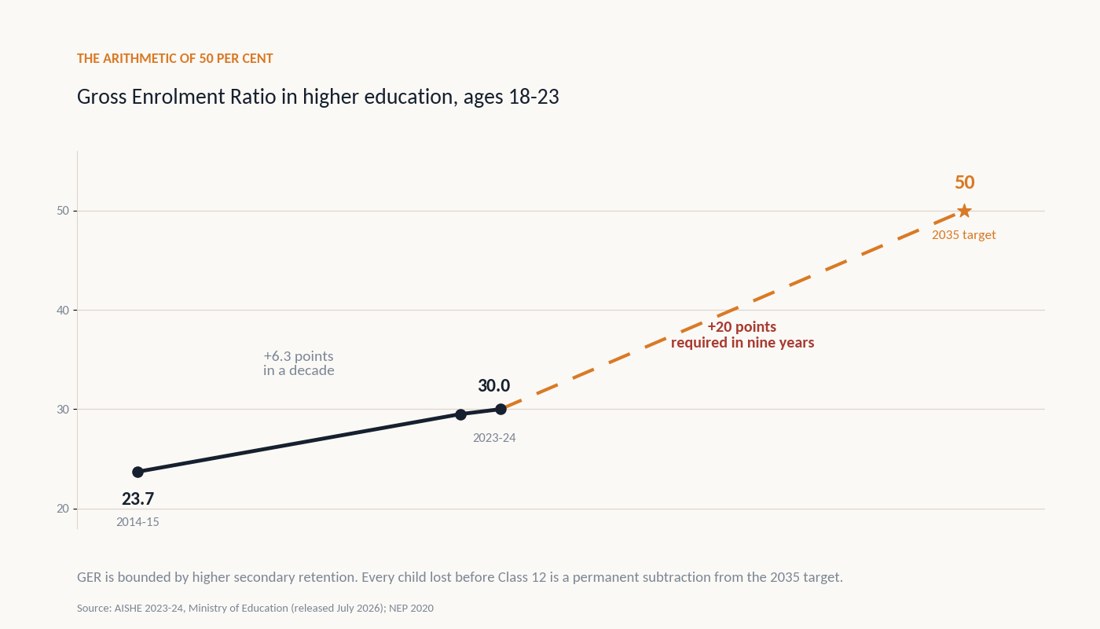
We are targeting 50% GER by 2035. We took a decade to add 6.3 points.
And that target will not be decided in university boardrooms. It will be decided in Class 3 arithmetic classrooms — because more than half of Class 8 students still cannot do basic division, and a child who reaches Class 11 without numeracy does not reach higher education at all.
Nine years left. The next phase cannot be about writing more frameworks.
Fill the posts. Fund the system. Publish the data while it still means something.
What is the biggest gap between the dashboard and the ground reality on your campus?
— Dr. Naval Singh Jain
Director, Pragya Group of Institutions, Bijainagar
Sources: AISHE 2023–24 (Ministry of Education, released July 2026); ASER 2024 (Pratham); UDISE+ 2024–25 and 2025–26; Union Budget 2025–26; Parliamentary Standing Committee 368th Report; analysis by Prof. Arun C. Mehta, Education for All in India; National Education Policy 2020.