The Story
From a single classroom to nine institutions
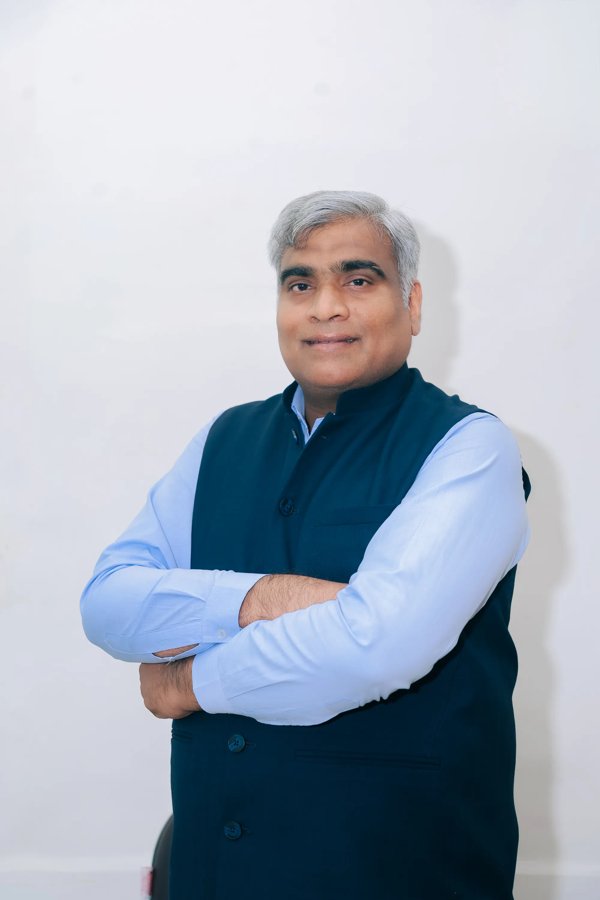
Dr. Naval Singh Jain is an educationist and author, and Director of the Pragya Group of Institutions, Bijainagar, Rajasthan. He began his career in the classroom and rose through every level of school education before taking charge of the group in 2006. He holds a Ph.D. devoted to the Shilank Teeka of the Sutrakritang Sutra, one of Jain philosophy's most demanding canonical commentaries, and an MBA in Human Resources: classical wisdom applied to modern institutions.
"A school conducts classes. An institution shapes generations."
Following his father, a headmaster honoured by the President of India, into education, his own path to leadership was built from the ground up — hostel superintendent, classroom teacher, TGT at Jain Vishva Bharati, Ladnun — before he became Principal of the very school he would go on to transform. When Dr. Jain took charge of the Pragya Group of Institutions in 2006, it comprised a single school of 180 students, struggling and slowly losing enrollment year after year, alongside one pre-existing college — Shri Pragya Mahavidyalaya (Est. 1972) and Shri Pragya Public School, Bijainagar (Est. 1976), both serving the Bijainagar community under the legacy of the Shri Pragya Jain Smarak Samiti, founded in 1969. Over the two decades since, under his leadership, the group has grown into a nine-institution ecosystem spanning play group to postgraduation — seven schools, the original college, and a dedicated JEE–NEET, CA and CMA coaching foundation — now serving more than 5,500 students and 400 educators and staff.
That trajectory shaped what has become one of the group's defining institutional principles: leadership is grown from within, never brought in from outside. Every Principal, Vice Principal, and Headmistress across the Pragya Group of Institutions today began as a classroom teacher within the group. Its transport head began as a driver. Its housekeeping and security heads began as peons. Its construction head began as a labourer. Its HR head began as a clerk.
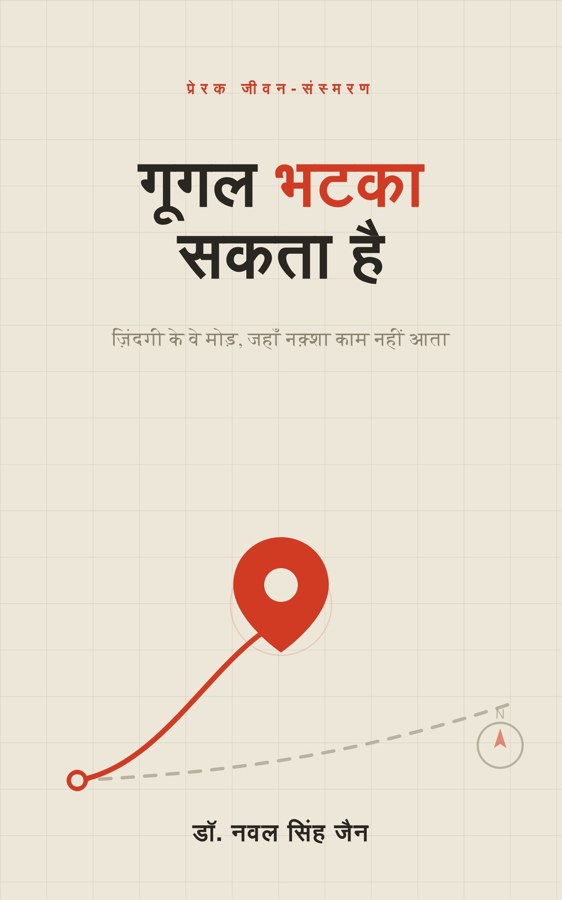
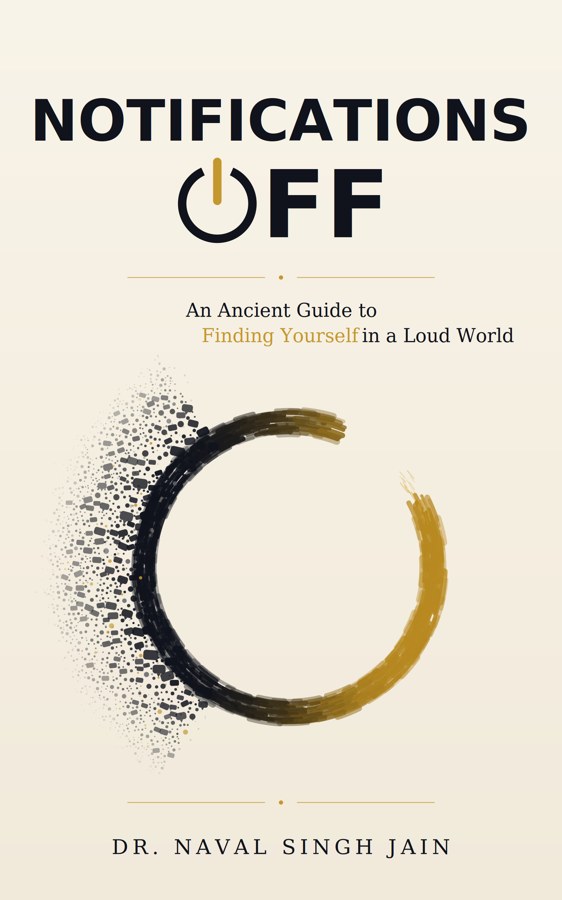
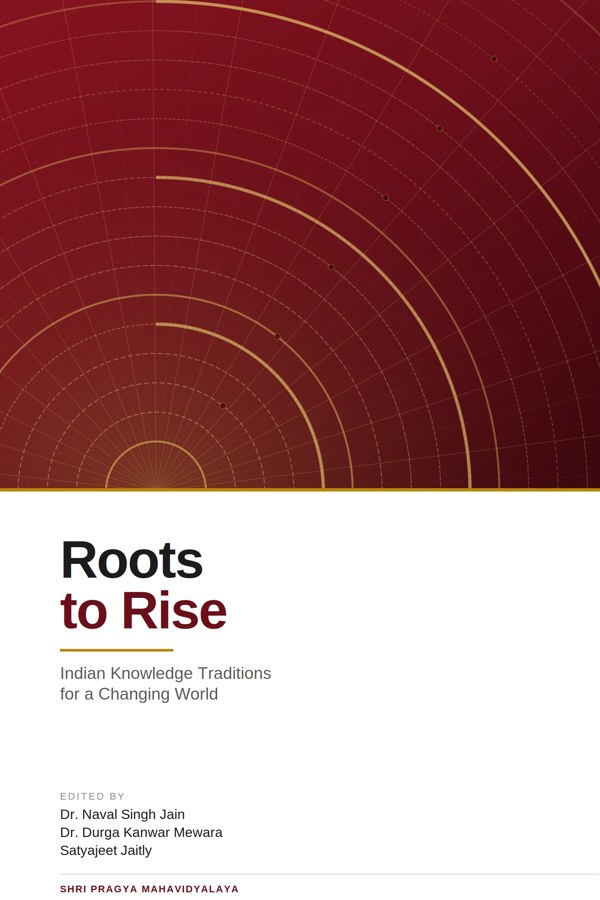
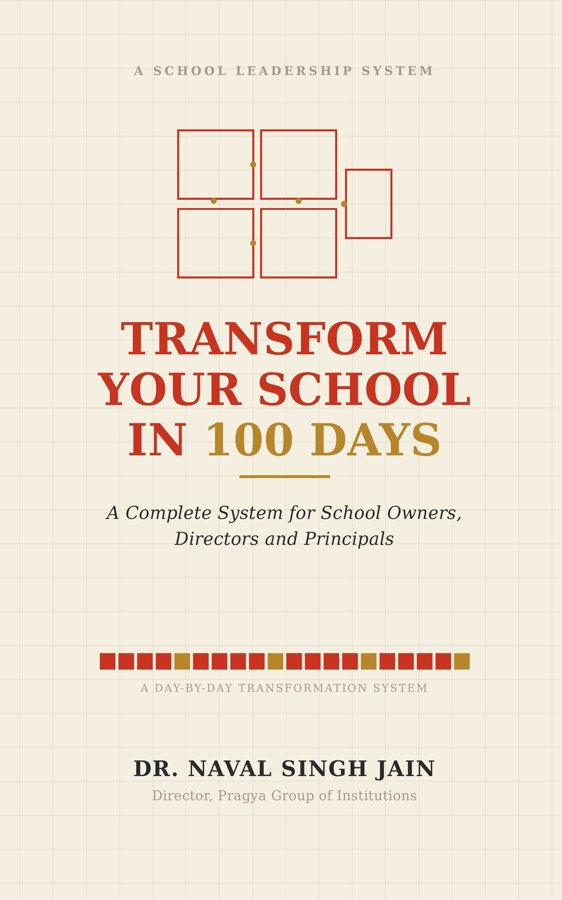
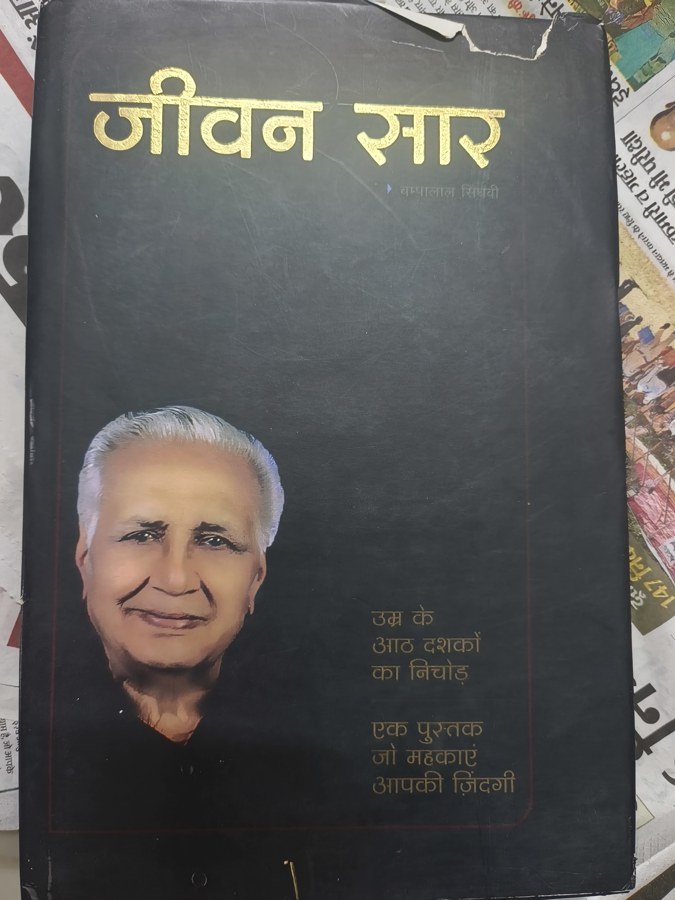
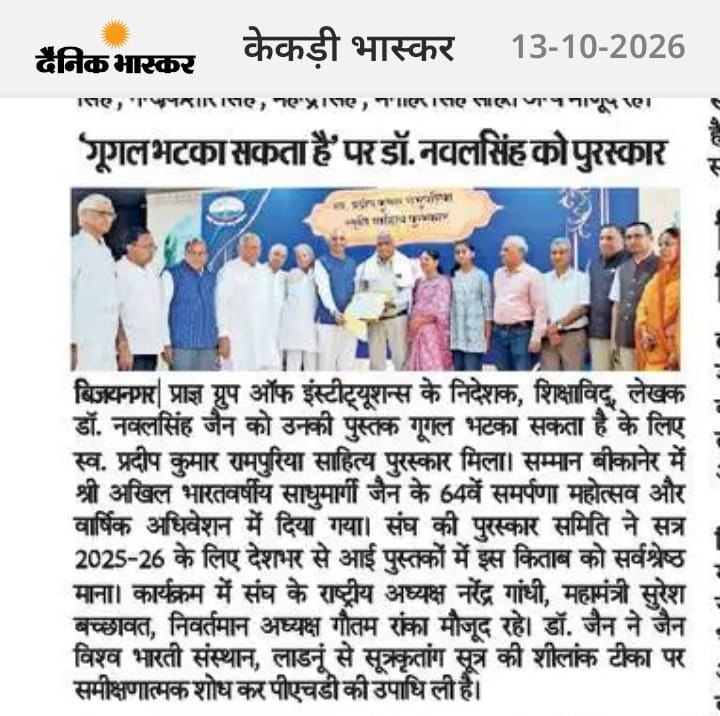
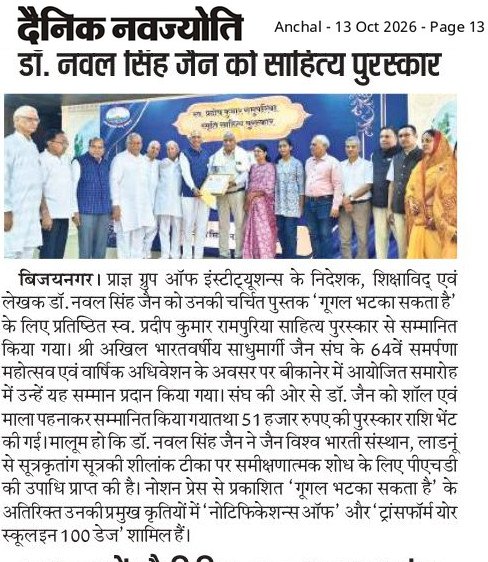
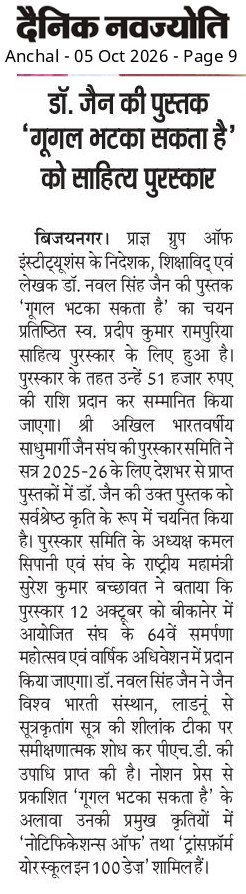
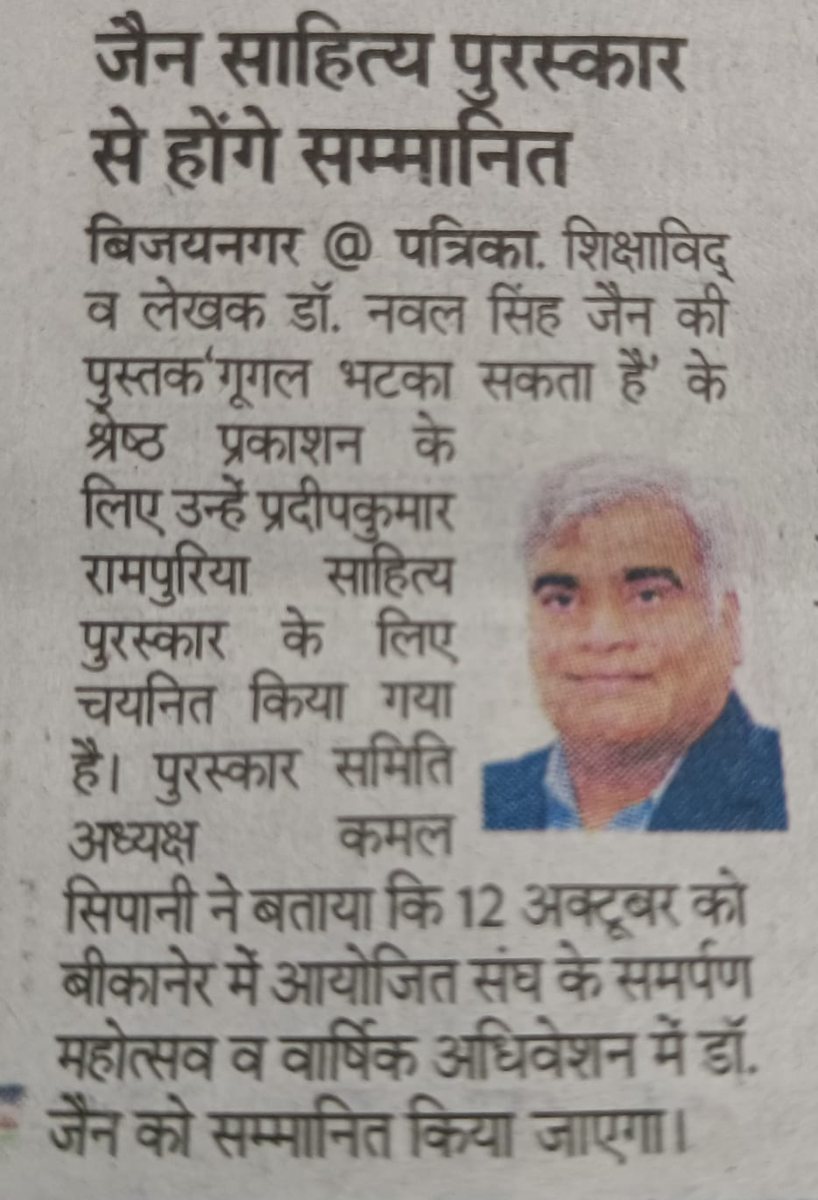
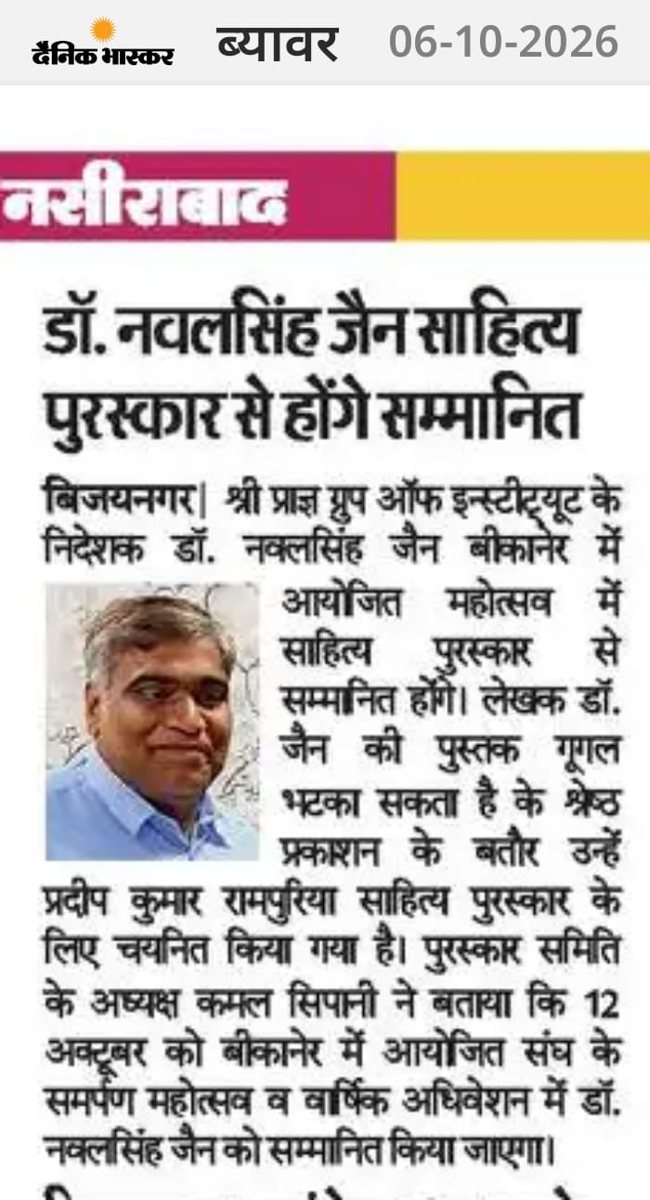
His writing carries the same conviction beyond Bijainagar. He is the author of गूगल भटका सकता है, ten true stories about the turns in life no map can guide you through; Notifications Off, on digital distraction and self-identity through the lens of Jain philosophy; and Transform Your School in 100 Days, a practical system for school owners, directors and principals. He served as Chief Editor of Roots to Rise: Indian Knowledge Traditions for a Changing World, and his editorial work reaches back to 2011, when he edited जीवन सार, a compiled memoir by Champalal Singhvi.
He is Editor-in-Chief of Pajjoya: Journal of Indian Knowledge Systems in Education, a peer-reviewed, open-access journal published by Shri Pragya Mahavidyalaya, with its inaugural issue forthcoming in January 2027. Where his career began with a single classroom, his writing and editorial work now reach school leaders, parents, students and scholars far beyond Rajasthan — carrying the same argument in every form: that wisdom, not just information, is what actually transforms a life, a classroom, or an institution.